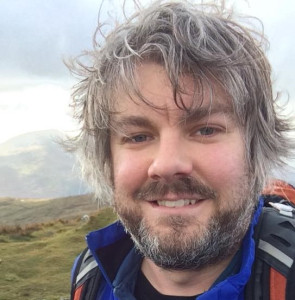
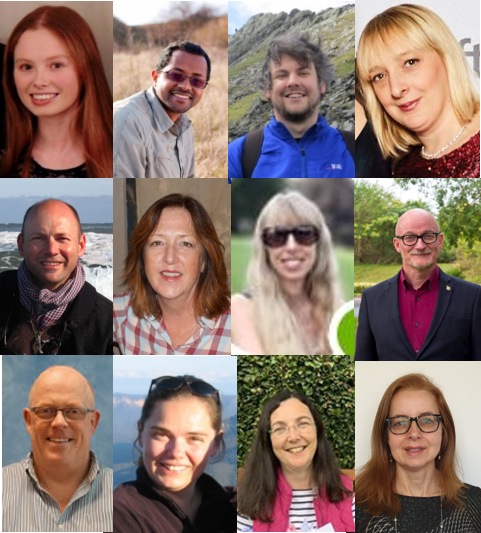
Meet the people who make up STEM Faculty.

I’m a Senior Lecturer in Earth Sciences in the School of Environment, Earth and Ecosystem Sciences at The Open University. My research concentrates on exploring the links between the Earth’s carbon cycle and climate on Cenozoic timescales, and I deploy a range of tools including organic geochemistry, foraminiferal geochemistry and General Circulation Models.
I graduated from Jesus College, University of Oxford with an MEarthSci (Hons) in Earth Sciences in 2005. Whilst there I worked on the prospects of developing a sea surface temperature proxy using stable strontium isotopes in coccolithophores calcite analysed by multi-collector inductively coupled plasma mass spectrometry (MC-ICP-MS). The project was supervised by Prof. Ros Rickaby.
In 2005 I moved to the school of Earth and Ocean Sciences, Cardiff University to conduct my doctoral research into middle Miocene climate dynamics, supervised by Prof. Carrie Lear (Cardiff) and Prof. Rich Pancost (Bristol). Using coupled organic and inorganic climate proxies, I constructed high resolution records of atmospheric pCO2 (alkenone and boron isotopes) and sea surface temperatures (foraminifera Mg/Ca and alkenone unsaturation indices). These proxy records, coupled with carbon system models and carbonate stable isotopes, allowed me insight into carbon cycle dynamics at a critical interval of major ice sheet growth in Antarctica. My PhD was awarded in 2010.
Following my PhD I moved to the Organic Geochemistry Unit in the School of Chemistry to work with Prof. Rich Pancost as a postdoc. I've worked on a number of grants with Rich, developing records climate and environmental change at various times through the Cenozoic, working mainly with hyphenated techniques (GC-MS, LC-MS, GC-C-IRMS).
In October 2011 I moved to the department of Earth Sciences for a stint as a lecturer, before returning to the OGU to take up a post as a Senior Research Associate in March 2013. Research during this time focussed on terrestrial methane cycling during Paleogene greenhouse climates, which involved collaborative work using the Unified Model with colleagues from the BRIDGE group (Prof. Paul Valdes) alongside organic geochemical approaches.
Much of my research focusses on sediments recovered from the ocean floor, and in autumn 2013 I took a short break from the OGU to participate in the TROPICS research expedition aboard the RRS James Cook (pictured above). Details of the expedition can be found here: http://tropics.blogs.ilrt.org/.
I moved to School of Environment, Earth and Ecosystem Sciences at The Open University in March 2016.
I went back to sea again in the summer of 2017, this time aboard the RRS Discovery to the Labrador Sea to participate in the European Research Council funded ICY-LAB project lead by Dr Kate Hendry from the University of Bristol. The expedition aims to increase our understanding of nutrient supply in the oceans. More details can be found on the project website: https://icylab.wordpress.com/.
Pronouns: he/him/his
I study ancient climates using molecular fossils. When an organism dies, often components of the organic remains are preserved in sediments. By analysing molecules characteristic of particular organisms or environmental conditions (“biomarkers”) we can reconstruct ancient environmental parameters. My research primarily uses organic geochemical proxies analysed by GC, GC-MS, LC-MS and GC-C-IRMS to reconstruct sea surface temperatures (TEX86 and UK'37) and atmospheric pCO2 (alkenone δ13C) along with other key indicators of past climates.
I us a multi-proxy approach and so also utilise more ‘traditional’ inorganic proxies, based on the skeletal remains, such as planktic foraminiferal Mg/Ca, δ13C and δ18O. My research focuses on key periods in the Cenozoic (the last 66 million years) including the middle Miocene Climate Transition (when large ice sheets first appeared on East Antarctica), the warm Pliocene (one of the best partial analogues for future anthropogenic warmth) and the PETM (Paleocene-Eocene Thermal Maximum).
The fidelity of our proxy methods for reconstructing ancient climate change is essential if we are to use that understanding to help predict the future, so a lot of my current efforts concentrate on thoroughly testing our proxies.
We have fantastic facilities and capabilities to run foraminiferal trace metal and organic geochemical analyses including lipid analyses by GC, GC-MS and GC-C-IRMS and GDGT analyses by HPLC-MS. If you have exciting ideas and samples get in touch!
I'm Principal Investigator for the NERC Standard Grant "Accurate and Precise Alkenone Records of Atmospheric CO2 for the Pliocene and beyond to Inform the Future" (NE/X000567/1).With colleagues from the University of Birmingham, this three year project took a thorough look at the alkenone palaeobarometer, and will provide important new records of climate sensitivity in the Pliocene. You can read more about the project here.
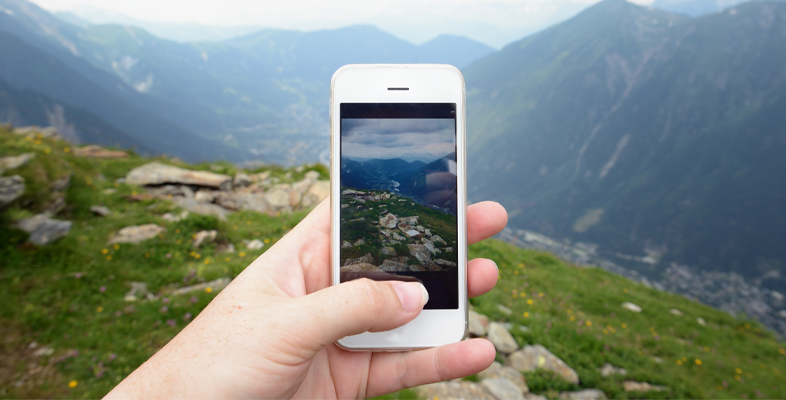
I wrote the Future Learn MOOC "The Earth in My Pocket: An Introduction to Geology" with Dr Anne Jay in 2016. Get an introduction to geology, discover where materials that make up everyday objects come from and learn how to use them sustainably. Sign up now for the next run, or take the free OpenLean version anytime here
I'm a core author and co-chair of the stage one module Science: Concepts and Practice (S112).The module provides a solid toolbox of knowledge, understanding, and skills for science students across the university. I wrote material on environmental change, living in a changing climate, and contributing material for other Earth science sections of the module.
I'm a guest author on the stage three module Earth Processes (S309), and wrote sections on the Intergovernmental Panel on Climate Change (IPCC) for the science in society module in 2016.
I was on the module team for the stage three module Terrestrial Ecosystems (S397). I helped to refresh what has been a very popular module and make it fit for online delivery.
I'm an author on the new stage three module Geology and Sustainability.
I'm a a member of the project team for the Open Societal Challenges project Mythic Storytelling and the Changing Environment. With colleagues from the Faculty of Arts and Social Sciences and the performance collective Theatre of the Gentle Furies we are exploring how myth and storytelling in performance can help communicate our place in the climate emergency.
I'm an academic consultant for BBC Inside Science, broadcast on BBC Radio 4, . More details on Inside Science can be found here. I have been accademic consultant for BBC Springwatch in 2023 and 2024 and BBC Our Coast in 2020.
I'm a reviewer for Climate Feedback, a worldwide network of scientists sorting fact from fiction in climate change media coverage. You can find my reviews here.