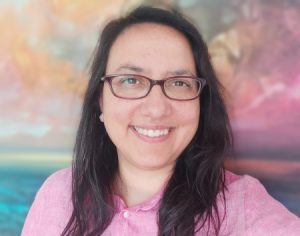
Meet the people who make up STEM Faculty.

I am a geneticist and bioinformatician with research interests in characterising genes and variants in cancers.
I have worked on research projects characterising DNA variants in cancers and I now run a research group focused on identifying functional and regulatory DNA and RNA variants that may affect risk of breast cancer and other cancers. We collaborate with Dr Francesco Crea's group within the Open University, identifying long non-coding RNAs (lncRNA) variants putatively underlying risk of prostate and other cancers. I have also collaborated with Professor Angela Cox (University of Sheffield) on the identification of regulatory DNA variants in apoptosis genes associated with breast cancer risk and Professor Nicola J Camp (University of Utah, USA).
My first post-doctoral position was in Professor Angela Cox's group, where we were the first to identify that the Caspase 8 gene (Casp8) was associated with risk of breast cancer and subsequently identify CASP8 and other apoptosis DNA variants (Yorkshire Cancer Research, Cancer Research UK, Breast Cancer Campaign, and the Wellcome Trust). Whilst doing my PhD (The role of p14ARF in familial and sporadic melanoma, funded by Imperial Cancer Research now called Cancer Research UK) in Professor D Timothy Bishop and Professor Julia Newton-Bishops's group with Professor Margaret A Knowles (University of Leeds), I was the first to: comprehensively screen for deletions on chromosome 9p in melanoma families and in sporadic melanomas (at a time when it was difficult for detect deletions and loss of heterozygosity, LOH); to identify p14ARF [CDKN2A-ARF gene (exon 1β)] as a tumour suppressor gene; identify the MTAP to KIAA1 gene region as important in melanoma aetiology and a candidate locus for the location of a tumour suppressor gene; and contributed to being the first to identify that introns are important in disease with the detection of a splicing variant (IVS2-105) in melanoma families.
Tools: genetic (e.g. high throughput PCR, allelic discrimination, sequencing, MLPA, qPCR), molecular (e.g. cell culture, flow cytometry, tissue microdissection/cores), and bioinformatics: R programming, data mining using publicly available online databases e.g. dbSNP, Ensembl, UCSC, GEO etc. Mainly gene expression tools.
Key words: cancer, breast cancer, genetics, clinical research/samples, gene expression, sequencing, molecular science, epidemiology, bioinformatics, data mining, DNA variants, RNA variants, DNA characterisation, RNA expression, protein expression.
Using genetic wet lab techniques, and bioinformatics tools and programming, we aim to develop biomarkers and treatment targets by:
Currently available PhD project
Discovering genes underlying MOG Antibody Disease (MOG-AD) and related diseases. For self-funded student. Bioinformatics project using R programming. Some training is available for R and some data has already been collected. Please email: sushila.rigas@open.ac.uk
Amount awarded |
Role |
Principal investigators |
Title |
Funder |
Type |
Years |
| £55,251+ | lead |
Dr Sushila Rigas (lead), Dr Mark Hirst, Dr Francesco Crea, Professor Angela Cox (University of Sheffield) |
Identification of functional variants in breast and other cancers with putative shared aetiology. | The Open University | PhD studentship stipend | 2016 - 2021 |
| £55,251+ | co-investigator |
Dr Francesco Crea (lead), Professor Ignacio (Nacho) Romero, Dr Sushila Rigas, Professor Yuzhuo Wang (BC Cancer Agency, University of British Columbia, Canada) |
Epigenetics and non-coding RNAs as novel therapeutic targets for incurable neuroendocrine prostate cancer. |
The Open University | PhD studentship stipend | 2016 - 2020 |
| £965 | co-investigator | Stephen Chandler, Dr Sushila Rigas | EMBL-EBI: Introduction to Next Generation Sequencing and Analysis of High Throughput Sequencing Data workshops attendance. | The Genetics Society | Training grant for PhD student | 2018 |
| £160 | co-investigator | Stephen Chandler, Dr Sushila Rigas | Communicating your research workshop attendance. | The Genetics Society | Training grant for PhD student | 2018 |
| £50,000 | lead (80%) | Dr Sushila Rigas and Professor Angela Cox (University of Sheffield) | Identification of regulatory DNA variants in apoptosis genes associated with breast cancer risk. | Yorkshire Cancer Research | Yorkshire Cancer Research | 2012-2013 |
| £100 | lead | Dr Sushila Rigas | HEA accreditation application fee. | University of Sheffield | Postdoc CPD fund | 2012 |
| £200 | lead | Dr Sushila Rigas |
British Society for Human Genetics Conference, 5-7 Sep 2011, Warwick University attendance. |
University of Sheffield | Oncology conference fund | 2011 |
| £21,529 | lead | Dr Sushila Rigas and Professor Angela Cox (University of Sheffield) | The role of apoptosis genes in breast cancer susceptibility. | Wellcome Trust | Value in People award | 2009 |
I have taught on Undergraduate and Graduate degree programmes, and supervised MSc degrees and undergraduate final year projects. I also designed and delivered active learning into the curriculums.
We have developed a LINUX server machine with algorithms and data for breast, ovarian and prostate cancers analysis. We hope to analyse this data further and include data on more cancers.
We aim to work towards developing:
Professor Angela Cox, University of Sheffield, UK (member of the Breast Cancer Consortium, UK)
Dr Anita Grigoriadis, Kings College London, UK
Professor Nicola J. Camp, University of Utah, USA
Dr Luca Quagliata, Thermo Fisher Scientific, and University of Basel, Switzerland
Professor Yuzhuo Wang, BC Cancer Agency, University of British Columbia, Canada