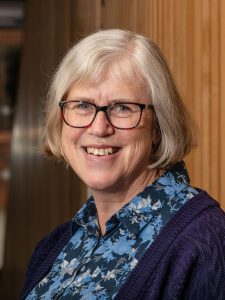
Meet the people who make up STEM Faculty.

Professional biography
After approaching 34 years (almost exactly half my life) of employment in a wide range of roles at the Open University, I retired in July 2025 and am now emeritus professor. I remain fiercely proud of the Open University's mission: "Open to people, places, methods and ideas" and derive my motivation from our gloriously diverse students.
My primary interests lie in the links between assessment and learning, and in equality, diversity and inclusion in the broadest sense of the words. My teaching and research in these areas was recognised by the award of the Institute of Physics' prestigious Lawrence Bragg Medal and Prize in 2023.
I have a BSc in Physics and a PhD by published work with the title E-assessment for learning? Exploring the potential of computer-marked assessment and computer-generated feedback, from short-answer questions to assessment analytics. I am a Senior Fellow of the Higher Education Academy.
Most of my Open University teaching was on our Stage 1 interdisciplinary science and Stage 2 physics modules. I was the final substantive module team chair of S217 Physics: from Classical to Quantum, which felt like a return to my roots, since my second OU appointment was as a tutor on an earlier version of the same module, back in the 1990s. Similarly, I started my OU career as a tutor on S102 The Science Foundation Course and ended it as a member of a small group reviewing options for the University’s Stage 1 offering in the future.
I was the main author of Maths for science (first published 2002, revised edition published Sept 2012, in copublication with Oxford University Press) which formed the basis of the highly successful Open University module with the same name (S151).
I was the first academic at the Open University to use sophisticated online computer-marked assessment, driven by a wish to provide students with instantaeous feedback on their work and to help them to pace their study. This led to the development of the OpenMark interactive online assessment system and of much of the current functionality of the Moodle Quiz Engine. A later project led to the development of the "Pattern Match" question type, which automatically marks and gives feedback on free-text answers of up to about 20 words. I have advised widely on the appropriate use of e-assessment and in particular on the use of short-answer free text computer-marked questions.
I served on the organising committee for the international Assessment in Higher Education (AHE) Conference for many years and I initiated a collaboration between AHE and the Transforming Assessment webinar series. I was delighted to lead the UK Delegation at the International Conference on Women in Physics in both 2021 and 2023.
I have had an unconventional career and battled for most of it with a lack of self-confidence and imposter syndrome. I spoke about my background as one of three speakers at a recorded event "Succeeding in STEM: Three women profs and their unconventional careers" in November 2019.
Research interests
I am a physics education researcher with broad interests in:
I was primary supervisor to Mark Parker on his PhD on the project "Establishing physics concept inventories using free text questions" and our work on automatically-marked short-answer questions and on concept inventories is now being taken forward by third-year PhD student Ashutosh Kumar Pathak. I am also primary supervisor to Astra Sword whose project "Equity and the Physics Degree" (with funding from both the Ogden Trust and the Bell Burnell Graduate Scholarship Fund) is investigating demographic differences in attainment in physics and the reasons for these differences.
I use both qualitative and quantitative research methodologies, and enjoy challenging accepted norms when evidence doesn't support them, with two of the keynote presentations that I have particularly enjoyed delivering being: