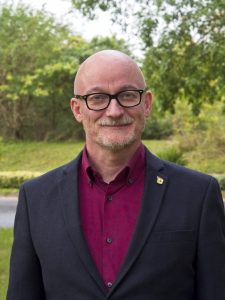
Meet the people who make up STEM Faculty.

I am Professor of Engaged Research at the Open University, UK. Through my academic work I examine tensions between theories and practices of knowledge exchange by evaluating examples where researchers and ‘publics’ have sought to (co)produce impacts derived from research. In combining research and practice through this work, I have developed the concept of engaged research, a principled approach to co-constructing ‘publics’ (wider constituencies, end-users and members of the public) to work reflexively in meaningful ways to generate, reflect on and evidence social and economic impacts. I have argued most recently that engaged research should have a moral imperative to act as a route to promoting epistemic justice, or ‘fairness in knowing’.
My research interests lie in exploring the ways that academic research is communicated via a range of media and genres, and how ideas about (upstream) public engagement with research may be shifting and extending social practices. Combining theory with practice through action research, I have explored:
My research publications are hosted on Open Research Online.
S350 Evaluating Contemporary Science
Effective communication is at the heart of good science. For as long as humans have tried to understand the natural world they have used various forms of communication to share information and ideas, with a view to improving our collective understanding. With the advent and widespread adoption of digital tools for communication the potential for citizens to contribute to the sciences has never been greater. This module will help you to explore the evolving landscape of science communication, developing skills in critical evaluation and communication, whilst exploring a range of contemporary topics in the sciences.