Meet the people who make up STEM Faculty.

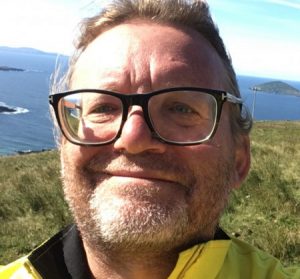
Phil completed his DPhil in computational modelling of X-ray lasers in 1991 from the University of York, after which he held research positions in the University of York, Université Paris-Sud and the Czech Institute of Physics. He then spent ten years in the finance sector, designing and modelling approximately $2 billion of asset financings in the transport sector. He returned to academia via an MSc in Quaternary Science from the University of London (RHUL/UCL) in 2006. He joined the Open University in 2007, initially as a post doctoral researcher on glacial-interglacial cycles. Phil's main focus is the development of computationally efficient Earth system models, with particular focus on interdisciplinary model coupling applications, integrated assessment and uncertainty quantification. He has authored 83 peer-reviewed papers (July 2024), including 15 in Nature and Science journals.
Phone: +44 7095 351 332
Science Applications
● Energy transition modelling
● Interdisciplinary studies in ecology and anthropology
● Future and paleo climate-carbon cycle dynamics and uncertainties
● Bayesian calibrations of climate sensitivity, future sea-level rise and CO2 fertilisation
● Paleoclimate reconstruction from microfossil assemblages
● Contributed simulations for IPCC AR5 and AR6
Model development
● FRANTIC network: financial shock propagation through the global equity ownership network
● PLASIM-GENIE: Intermediate complexity Atmosphere-Ocean-Carbon-Cycle GCM
● PALEO-PGEM: Pliocene-Pleistocene climate emulator for coupling applications
● ENTSML: managed land use model
● PLASIM-ENTSem: future climate emulator for integrated assessment applications
● GENIEem: future carbon-cycle emulator for integrated assessment applications
● BUMPER: Bayesian paleoclimate reconstruction from microfossils
● MEMLM: Multi Ensemble Machine Learning Model (paleoclimate reconstruction from microfossils)
Methodological Development
● Emulating high-dimensional inputs and outputs
● Emulator-filtered ABC/history matching
Selected recent publications
Stranded fossil-fuel assets translate to major losses for investors in advanced economies, Semieniuk et al, Nature Climate Change (2022)
A stronger role for long-term moisture change than for CO2 in determining tropical woody vegetation change, Gosling et al, Science (2022)
Reframing incentives for climate policy action, Mercure et al, Nature Energy (2021)
Tectonic and climatic drivers of Asian monsoon evolution, Thomson et al, Nature Communications (2021)
Late Quaternary dynamics of Arctic biota from ancient environmental genomics, Wang et al, Nature (2021)
Past extinctions of Homo species coincided with increased vulnerability to climatic change, Raia et al, One Earth, 3, 480-490 (2020)
Potential for large-scale CO2 removal via enhanced rock weathering with croplands, Beerling et al, Nature (2020)
Revisiting Antarctic ice loss due to marine ice cliff instability, Edwards et al, Nature (2019)
Modeling the ecology and evolution of biodiversity: Biogeographical cradles, museums, and graves, Rangel et al, Science (2018)
Macroeconomic impact of stranded fossil fuel assets, Mercure et al, Nature Climate Change (2018)
Climate–carbon cycle uncertainties and the Paris Agreement, Holden et al, Nature Climate Change (2018)
Current teaching
S831: Earth and Environmental Science Challenges (co-Chair, author "Climate change")
S319: Geology and Sustainability (Module team, author "Earth's climate system")
S397: Terrestrial Ecosystems (Module team, author "Interpedendence")
S350: Evaluating Contemporary Science (Module team, "Evaluating data in contemporary science")
Past teaching
S808: Earth Science: a Systems Approach (Chair)
S396: Ecosystems (Module team)
S250: Science in Context (Module team)
U216: Environment (Tutor marked assignments)
S279: Our Dynamic Planet (Tutor marked assignments)