Meet the people who make up STEM Faculty.

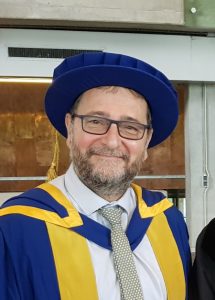
Emeritus Professor In Cellular Neuroscience

I am a cell biologist with research and teaching interests in blood-brain barrier physiology and pathology and in neuroimmunology.
Overview: My research interests focus on the function of cerebral blood vessels in health and disease. In particular, I am interested in the pathogenic mechanisms of blood-brain barrier (BBB) dysfunction in disorders of the central nervous system (CNS) such as multiple sclerosis (MS) and Alzheimer’s disease (AD). I have currently focused my research strategy in identifying the molecular mechanisms mediating abnormal increases in BBB permeability and in leukocyte migration, which ultimately contribute to neuronal death. My research has applications not only as a means to identify potential therapeutic targets for CNS pathologies but also to provide a basis to enhance drug delivery to the CNS. In order to address these questions, my research group uses cell and molecular techniques applied to cultured human brain endothelium and astrocytes and in vivo animal models of disease.
https://www.researchgate.net/profile/Ignacio_Romero2
Current Research Projects:
Overview: Open University teaching is based upon distance learning, with students studying core teaching materials designed, produced and led by academics. Our modules are studied for both standard undergraduate purposes and for CPD by professional scientists across the world. Our module materials are produced by teams of academics and production media specialists and teaching is directly provided in small groups by our specialised teams of associated lecturers. Modules are taken by a number of students ranging from ~100 (e.g. practical modules) to ~1,500 (e.g. biological psychology) every presentation. Assessment is in the form of tutor- (TMA) or computer-marked (CMA) assessments and examinable components (ECA). My main teaching area reflects my research field of cell and molecular neurobiology.
Roles in modules I have contributed to
Module Team Chair: Level 3 The molecular basis of human disease (15 points) (2009-2012) and Level 2 Human Biology (30 points) (2004-2005): As a module chair I worked on overseeing the presentation of the which includes the delivery of assessment to students, chairing Exam Boards, Standardisation and Awards meetings and organizing script marking.
Author of distance teaching material (text and activities) and assessment: Level 3 Infectious Disease, author 2 chapters and computer-marked assessment; Level 1 Understanding Cancers, Author 5 chapters, Web-based CD-ROM activities, and computer-marked continuous and examinable assessment; Level 3 The molecular basis of human disease, author 3 chapters CD-ROM based Experimental Investigation and Activities; Level 2 Biological psychology: Exploring the Brain, author 2 chapters, Web-based ‘Exploring the Brain’ CD-ROM, tutor-marked continuous and examinable assessment; Level 3 Molecular and Cell Biology, author 2 chapters, CD-ROM based Activities and tutor-marked continuous and examinable assessment.
Design of Laboratory Practical Experimentation: Level 3 The molecular basis of human disease: (15 points) (2006-2012). A laboratory based module studied by 120 students per year, focussed on the relationship between human genetic variation and susceptibility to HIV1 infection. Practical teaching covered area of PCR and western blot analysis.
Design of Virtual Experimentation: Level 2 Practical Science Drug metabolism and genetic variation (30 points) (2010-present); Level 3 Plants, Pigments and Light (15 points) (2004-2005); Level 3 Fat – the physiology of adipose tissue (15 points) (2004-2005); Level 3 The molecular basis of human disease: (15 points) (2006-2012).
Extra-curricular Distance Teaching: Academic Editor of Communicable Diseases module and workshop facilitator for the Open University’s Health Education and Training (HEAT) Programme in collaboration with the Ethiopian Federal Ministry of Health (2011), aimed at training frontline healthcare workers in Sub-Saharan Africa.

