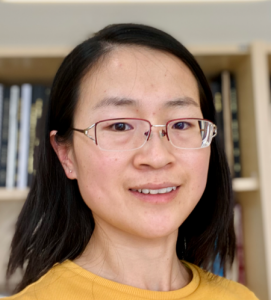
Meet the people who make up STEM Faculty.

I am an HCI researcher at the Open University. I am passionate about exploring how digital technology could facilitate individuals and society to flourish. My cross-disciplinary collaboration experience enhances my teamwork skills with people from different backgrounds and professionals such as psychology, policing, education, computing, management, and social workers. My expertise includes using human-centric approaches (qualitative and quantitative methods) to understand the problem space and user requirements and feed these to the design, development, and evaluation of socially responsible technology. Before I joined OU, I worked as a Research Associate at Lancaster University and Newcastle University.
PhD, MEng, BSc, Dipol. Psychology
I got my PhD in Computer Science at the University of Nottingham, MEng in Software Engineering, and BSc in Computer Science. I'm currently pursuing a BSc in Psychology and an MBA at the Open University as part of my academic journey.
My research interests are shaped and evolving with my experience and passions:
I am a part of the module team for producing a new level-3 module, TM342 Intelligence and Ethics at the Open University.
I am involved in teaching the module TM356 Interaction Design and User Experience at the Open University.
I was an Associate Lecturer at University College London to teach and supervise master students in MSc HCI and digital health. I also marked students' essays for Module PSYC0098 Human Factors for Digital Health, PSYC007 final year project, and HCI MSc Projects.
I am working in the Future Responsible Technology stream, to explore what is good/responsible technology and how to make good/responsible technology.
Coercive and Controlling behaviour (CCB) is treated as a criminal offence in Section 76 of Serious Crime Act 2015. In this project, we work closely with Avon and Somerset police to explore the potential opportunities for machine learning to detect CCB based on accumulated records. However, policing involves complex practices and diverse stakeholders. My roles include designing a survey to understand the current practices in safeguarding and police investigating CCB, especially focusing on the data inventory that contains traces of potential CCB offences.
Initiated during the COVID-19 lockdown, this project aims to promote people's mental well-being and resilience with a social gratitude intervention. Based on psychological theories, we designed and built an online platform called Gratitude Tree, and it has proliferated since its launch in Dec 2020.
I am leading this Knowledge Transfer project, intending to understand pedestrians' perceptions of safety, safe mobility practices, and safety technology. We have collected 665 survey responses from the UK representative sample, and our results highlighted the intersectionality of identity and walking situations on people's safety concerns. The initial data analysis will be published as a CHI2024 paper.
This multi-disciplinary project looked at the possibility for citizens to self-investigate the incidents and crimes. My roles include working closely with forensic psychologists, social psychologists, local communities (including the parish council), police forces (Merseyside, Thames Valley Police), and OU CPRL to explore the citizen-police interaction. I also led the 12-week workshop and focus group study to examine the 'extreme' citizen-led investigation of their local community issues.
With my passion for empowering women from minority ethnic groups, I am also working with colleagues from Open University Business School on this Open Societal Challenge project to explore how mothers of preschool children from minority groups could be supported in the workplace. My roles include conducting systematic reviews of literature and interviewing HR/Managers and policymakers to understand current gaps in policy and practice in supporting the employment of new mothers from minority groups.
I am working as a PDRA in Design for this ESRC-funded project led by Prof. Lara Frumkin. My roles involve exploring the indicators of trust in Forensic Science by using both qualitative and quantitative methods, and how to use participatory design methods to better design the tools (e.g., digital, policy, practice) to mitigate the distrust and foster healthy trust among the public, especially marginalised groups.
Before I joined the OU, I worked on the Digital Threads project funded by AHRC in the School of Computing and Communications at Lancaster University. I visited Malaysian villages to observe, interview, and run workshops with Songket weavers (most of them are women) and 'middlemen' who pay weavers low wages. We explored how digital technology (e.g., co-design app, blockchain) could help exploited woman weavers become more visible on the supply chain. We reflected on the 'mutually beneficial exploitative relationships' in our CHI paper.