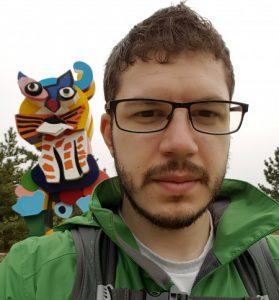
Meet the people who make up STEM Faculty.

Dr Mark Hintze is a developmental biologist with expertise in stem cell biology, tissue patterning, and mechanobiology. He studied Psychology as an undergraduate at The Open University before completing an MSc in Neuroscience at University College London and a PhD in developmental biology at King’s College London. He then held postdoctoral research positions at King’s College London and Imperial College London, where he investigated the genetic and environmental regulation of embryonic development and stem cell fate. In 2023, he joined The Open University as a Lecturer in Biology.
Research
Dr Hintze’s research focuses on how mechanical forces and environmental variation influence stem cell fate decisions during development. Using the model organism Caenorhabditis elegans, he investigates how developmental systems integrate external environmental cues to regulate cell fate. His work combines forward and reverse genetics, CRISPR-based genome editing, and RNA sequencing to identify conserved pathways that control epidermal stem cells.
A central aim of his research is to understand how genetic networks maintain robust and reproducible stem cell fate during development. His recent work has identified roles for pathways including Wnt signalling and heat shock protein function in the regulation of epidermal patterning and cell number. He is also interested in applying systems biology approaches to reconstruct gene regulatory networks involved in mechanotransduction during development.
Mark teaches across several biology and biomedical science modules at The Open University, including: