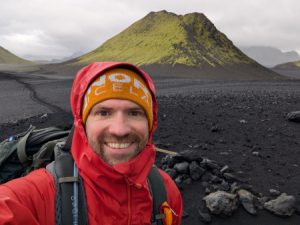
Meet the people who make up STEM Faculty.

2023- present: Senior Lecturer, AstrobiologyOU, School of Environment, Earth and Ecosystem Sciences, Open University
2023: Senior Research Fellow, AstrobiologyOU, Open University
2020-2023: Research Fellow, AstrobiologyOU, Open University
2016-2019: Postdoctoral Research Fellow, School of Earth and Environmental Sciences, University of St Andrews
2016: Research Assistant, School of Earth and Environmental Sciences, University of St Andrews
2012-2016: PhD in Astrobiology, School of Physics and Astronomy, University of Edinburgh
My research interests centre around icy worlds in our Solar System that contain liquid water under their surfaces. These so-called 'ocean worlds' that include Jupiter's moons Europa and Ganymede, Saturn's moons Titan and Enceladus, and dwarf planets such as Ceres, may contain conditions suitable for life in the present day. I focus on how ice and salts delivered to the surfaces of these worlds by processes such as 'cryovolcanism' can be used to learn about the oceans far below.
Work in my team involves laboratory experiments and fieldwork to icy world analogue locations in Earth's high latitudes. We seek to understand how ocean chemistry and evidence of life might become delivered to and preserved at the surfaces of icy worlds. A major focus is on how the physical conditions in cryovolcanic eruptions (such as the extreme changes in temperature and pressure in the plumes of Enceladus) affects the erupted material.
In the lab, we develop and employ novel cryo-analytical techniques to understand icy world materials at the molecular and micro-scale, and use planetary simulation facilities to relate our findings to the icy surfaces of ocean worlds. In the field, we study ice, brines and aerosols ejected from the subsurface in polar and sub-polar environments, including in Iceland, Svalbard and the Canadian High Arctic. Our findings help interpret existing data from missions such as Galileo and Cassini, and support upcoming missions such as the JUpiter Icy Moons Explorer (ESA) and the Europa Clipper (NASA).
Recent research highlights
1. My team has discovered a new type of salt crystal, made from sodium chloride and water molecules, that forms during rapid 'flash' freezing of brines. This is only the third new form of sodium chloride to be described in over 200 years. In a recent paper led by OU postdoctoral researcher Dr Rachael Hamp, we describe the structure of this material and how it relates to other known forms of sodium chloride. If detected by upcoming missions at icy worlds it would indicate regions where liquid from below has been rapidly delivered to the surface by active process such as plumes.
2. By simulating planetary surface conditions in the lab, we revealed how the presence of salts within ice influences the loss of ice as vapor (also known as sublimation) once exposed to the vacuum of space. This work, led by OU researcher Dr Hannah Chinnery, showed that the intricate micro-scale texture of salts within ice is the main factor governing sublimation rates. Because the microstructure is affected by freezing rate, an implication of our work is that on the surface of icy worlds rapidly frozen salty ices may be more resistant to erosion than those which froze slowly.
3. We have developed new experimental and analytical techniques to study on the microscale how salty fluids behave as they freeze. We have used these approaches to identify the likely composition of ice grains emmitted in the plumes of Enceladus, and track how evidence of life might be captured or preserved within them.
4. I have identifed Europa 'analogue' locations in the Canadian High Arctic, where supercold brines seep out to the surface, and form salts with similar chemical composition to those observed at Europa. This work has led to an extended research programme, with a range of talented UK and international colleagues, tracking how chemical and molecular traces of microbial life are preserved within the salts. This work helps to build the rationale for future missions that aim to directly seek evidence of life at icy worlds.