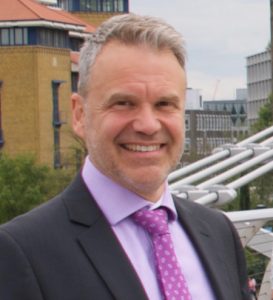
Meet the people who make up STEM Faculty.

Problem solving is the engine of civilisation. From language to law, cities to satellites, every major human achievement has emerged from the impulse to understand problems and respond creatively to them. Our tools, institutions, and technologies are all products of this continuous effort. Problem solving is not just a skill—it is the essence of what it means to be human.
Value is created by understanding problems and developing solutions. No product or service, no innovation or enterprise, exists without a problem to address. Economic value emerges when a problem is recognised, framed, and resolved—whether that problem is practical, emotional, social, or technical. Understanding precedes solution; and through solution, value is born.
But not all problem solving is benign. Some problems are framed to benefit the few at the expense of the many. Some solutions are designed to exploit, exclude, or obscure. From disinformation networks to addictive technologies, from planned obsolescence to systems of oppression—perverse problem solving creates value for some by causing harm to others. And it does so with ever-increasing technical sophistication.
This is why we need a science of problems. We have disciplines devoted to solving problems—engineering, medicine, economics—but none devoted to understanding the nature of problems themselves. The new discipline of problem science gives humanity the tools to recognise when problems are being misframed, when solutions are misleading, and when interventions might cause more harm than good. It would help us design better systems, make wiser decisions, and navigate complexity with greater care.
Problem science is not a luxury. It is a necessity. In an age of accelerating change and compounding crises, understanding problems deeply and clearly may be our most urgent collective challenge.
My mission is to elevate problem solving to its rightful place as the defining activity of human progress—by founding and advancing the discipline of Problem Science.
Where others focus on solving problems, I focus on understanding them—how they emerge, how they are framed, and how they shape the world around us. I believe that humanity’s capacity for progress, justice, and sustainability depends not just on better solutions, but on better problem framing, shared understanding, and ethical discernment.
I will:
• Establish Problem Science as a discipline, alongside physics, chemistry, economics, and organisational science—grounded in rigorous thinking and relevant across domains.
• Expose perverse problem solving, where technical ingenuity serves harmful or exploitative ends, and equip others to do the same.
• Equip decision-makers, researchers, and practitioners with the tools to see problems more clearly, frame them more honestly, and solve them more responsibly.
• Develop a shared language and methodology for navigating complex problems—helping us to ask better questions, not just seek faster answers.
• Champion the idea that value without understanding is dangerous, and that understanding without action is not enough.
This mission is not academic alone—it is ethical, civic, and existential. We live in a time where the world is being reshaped by solutions to badly understood problems. If we are to meet the challenges of this century, we must become not just better problem solvers, but wiser ones.