Meet the people who make up STEM Faculty.

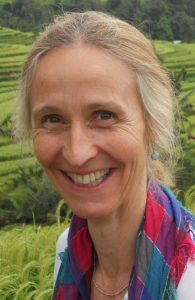
Helen completed her undergraduate studies in Mathematics, and postgraduate studies in Computer Science at University College London before joining a software house in London. As a programmer, she developed and maintained software systems for a range of clients including City Traders, Oil Companies and Publishing Companies. In 1987 she came to the Open University as a temporary lecturer in Computing. Between 1987 and 2008, she held several posts at the OU and elsewhere including City University London, CTC Trust and various publishing companies and architectural practices. Since 2008 she has been Professor of Software Engineering in the School of Computing and Communications. Helen holds a Postgraduate Certificate in Teaching and Learning in Higher Education, is a Fellow of the HEA, a Chartered IT Professional and a Chartered Engineer.
Helen’s professional activities have ranged across several disciplines of Computer Science including HCI, Software Engineering and Project Management, and have reached out to other related disciplines such as Education and Design Studies. This diversity has been reflected in Helen’s Teaching and Research interests, but a constant in both has been the desire to engage with practice – to understand and try to improve practice.
In 2014 Helen became Associate Dean for Research, Scholarship and Enterprise in the Maths and Computing Faculty, and in 2016 was appointed as Associate Dean for Research and Scholarship in the newly-formed STEM Faculty. She has recently been granted emeritus status and continues to support research activities within the School.
Leveraging her expertise in both HCI and Software Engineering, Helen’s research focuses on the study of professional software practice in industry, specifically the human and social aspects of software development. This focus on human factors has led her to adopt qualitative techniques and theories from other disciplines including distributed cognition, design reflective practice, interaction analysis and technological frames. She was a founding organiser of the popular CHASE workshops (now an annual conference) held in conjunction with ICSE every year since 2008, and has been a persistent advocate for developer-centred research since the 1980s. Recent activities include:
Helen has supervised PhD students in the areas of HCI, ACI (animal-computer interaction) and software engineering, with a key focus on integration with practice.
Helen's main teaching interests are in Interaction Design. She is the joint author of one of the leading international textbooks on HCI, Interaction Design: beyond human-computer interaction (id-book.com) which has been translated into 7 languages, most recently Portuguese (for Brazil) and Japanese; it is now in its 6th edition. She has been involved in HCI modules at the OU since the early 1990s, including chairing production and presentation of the undergraduate module M364 between 2003 and 2016, and its delivery to over 4000 students in Botswana as part of a computer science programme of study. Helen has also contributed to undergraduate and postgraduate modules in software engineering, object-oriented development and project management.
Helen has undertaken a wide range of activities within the community:
Helen works closely with practitioners in industry as well as researchers in other universities across the globe.

